What We Offer to EU and International Research Projects & Consortia
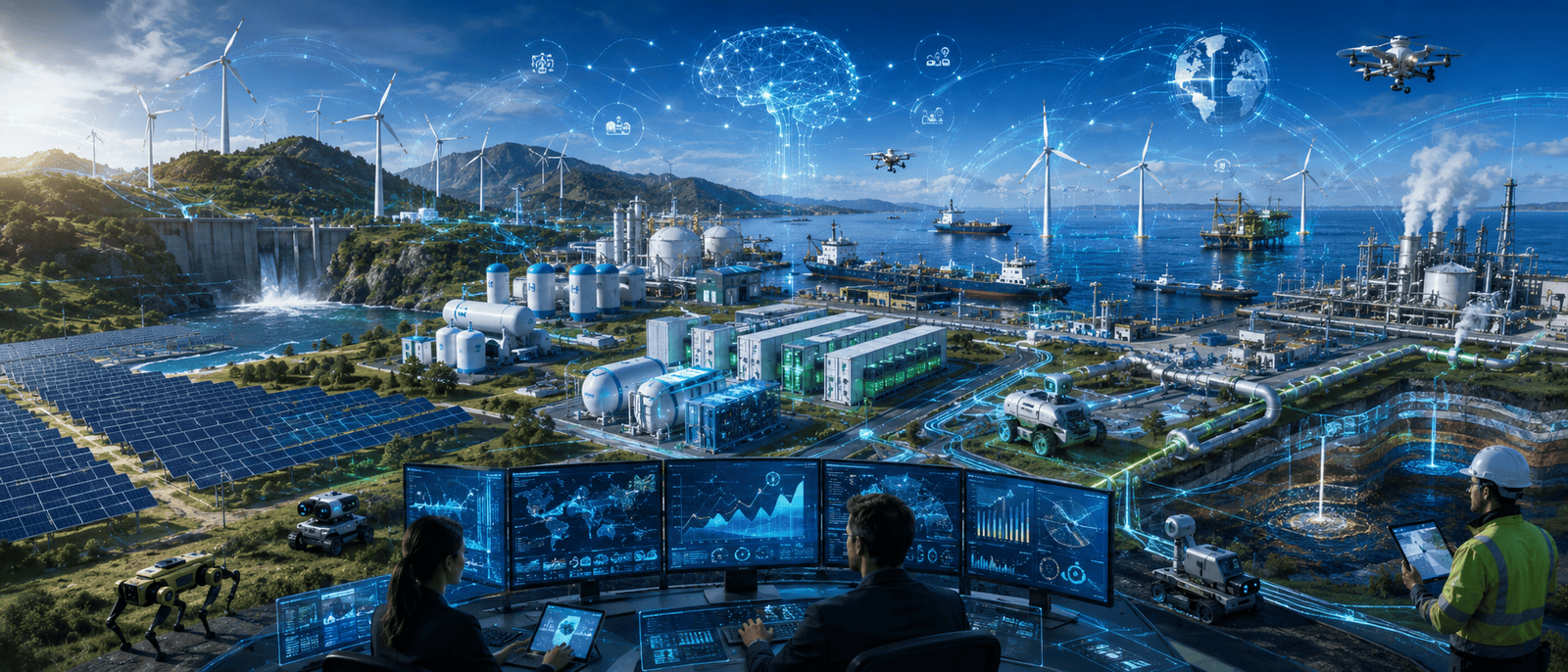
Energy Renewables & Alternative Fuels
In energy, renewables, fuels, hydrogen, ammonia, methane, CCUS, energy hubs, grids, storage, and energy-transition projects, we can support techno-economic modelling, predictive maintenance, robotic inspection, energy-asset forecasting, AI-based optimisation, and infrastructure-scale asset management. We can contribute to projects involving solar, wind, hydro, geothermal, hydrogen, alternative fuels, smart grids, fuel-cell systems, battery systems, offshore and port-energy systems, and carbon-storage value chains. Our value is especially strong where engineering, forecasting, financial modelling, and exploitation must be combined: for example, TRL roadmaps, cost-benefit models, energy-hub scenarios, risk-adjusted investment cases, AI-based operational optimisation, and pilot validation for energy infrastructure.
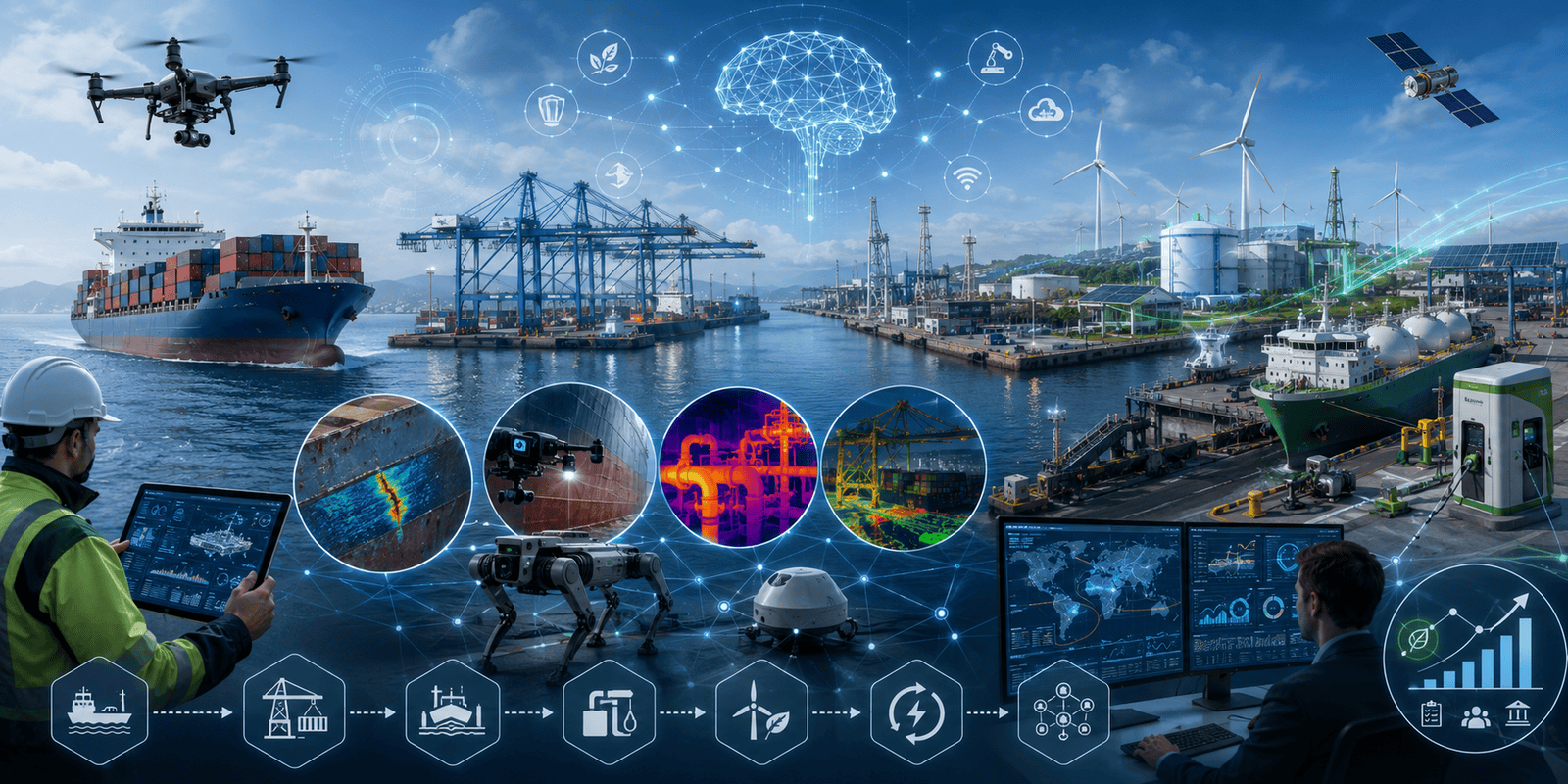
Maritime, Shipping and Ports
In maritime, shipping, and port-related EU projects, we can contribute AI-enabled asset management, port digitization, autonomous inspection, predictive maintenance, voyage and logistics optimization, emissions-reduction support, alternative-fuel transition modelling, and operational decision-support systems. Our contribution can focus on ports, vessels, terminals, shipyards, bunkering infrastructure, green shipping corridors, port-energy interfaces, and maritime logistics chains. We can support pilots involving drones, quadruped robots, IoT sensors, acoustic emission, ultrasound, thermography, multispectral imaging, and AI-based inspection workflows for ship structures, port assets, cargo-handling infrastructure, and energy systems. We can also assist with exploitation plans for maritime technologies, including TRL progression, KER definition, regulatory-readiness mapping, business cases, and investor-oriented scale-up pathways.
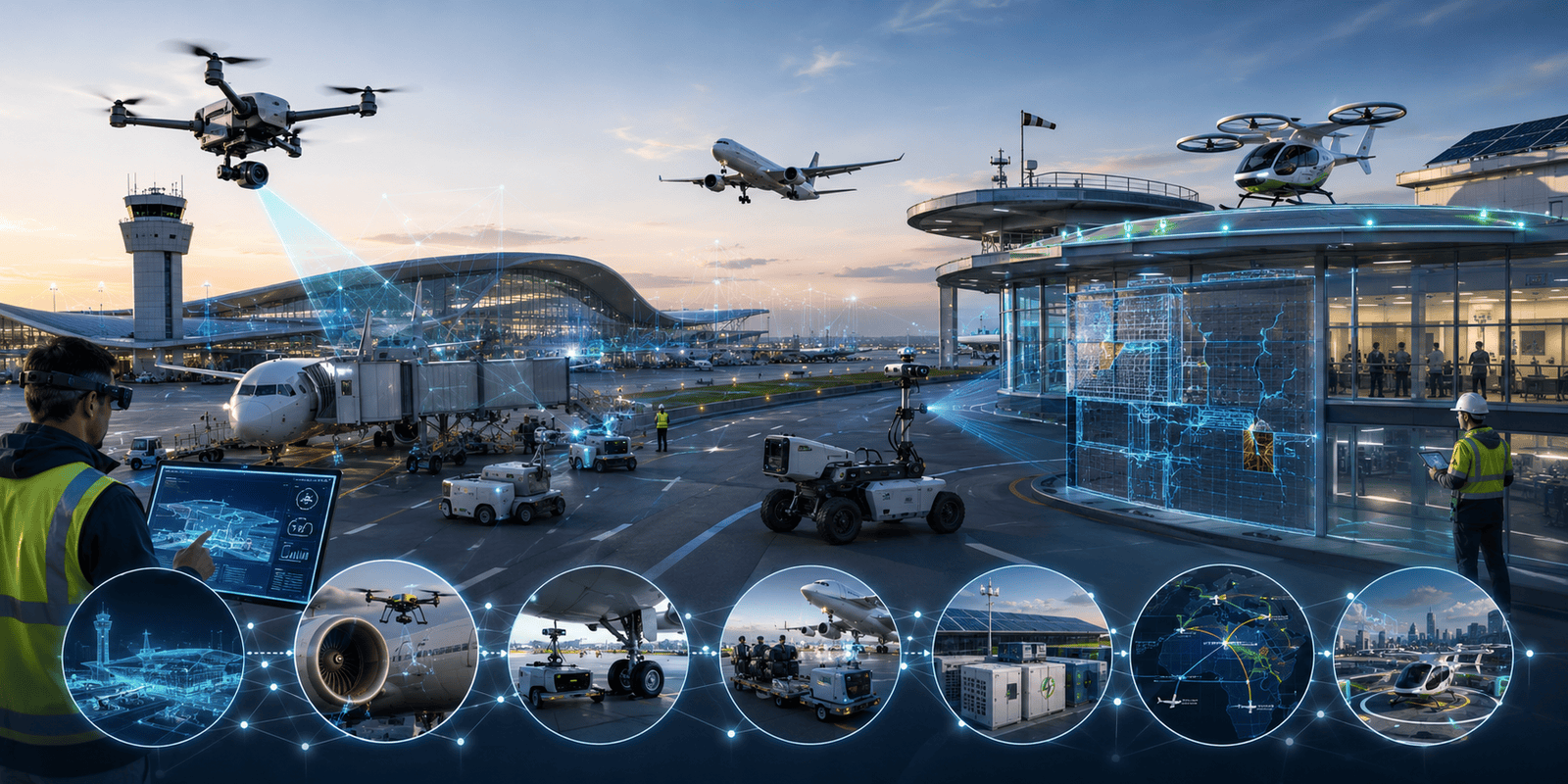
Airspace, Avionics and Airports
In aviation, avionics, airports, vertiports, and airspace-related projects, we can support digital airport transformation, infrastructure monitoring, autonomous ground operations, drone-assisted inspection, robotics validation, passenger and logistics optimization, and AI-enabled decision-support systems. Our role can include pilot design for airport digital twins, aircraft and ground-infrastructure inspection, airport energy-management systems, ground-handling optimization, seaplane-base development, eVTOL/vertiport readiness, and smart mobility integration. We can contribute embedded systems, sensing architectures, NDT/SHM methodologies, AI analytics, risk modelling, and exploitation planning for technologies targeting safer, greener, and more efficient airport and air-mobility ecosystems.
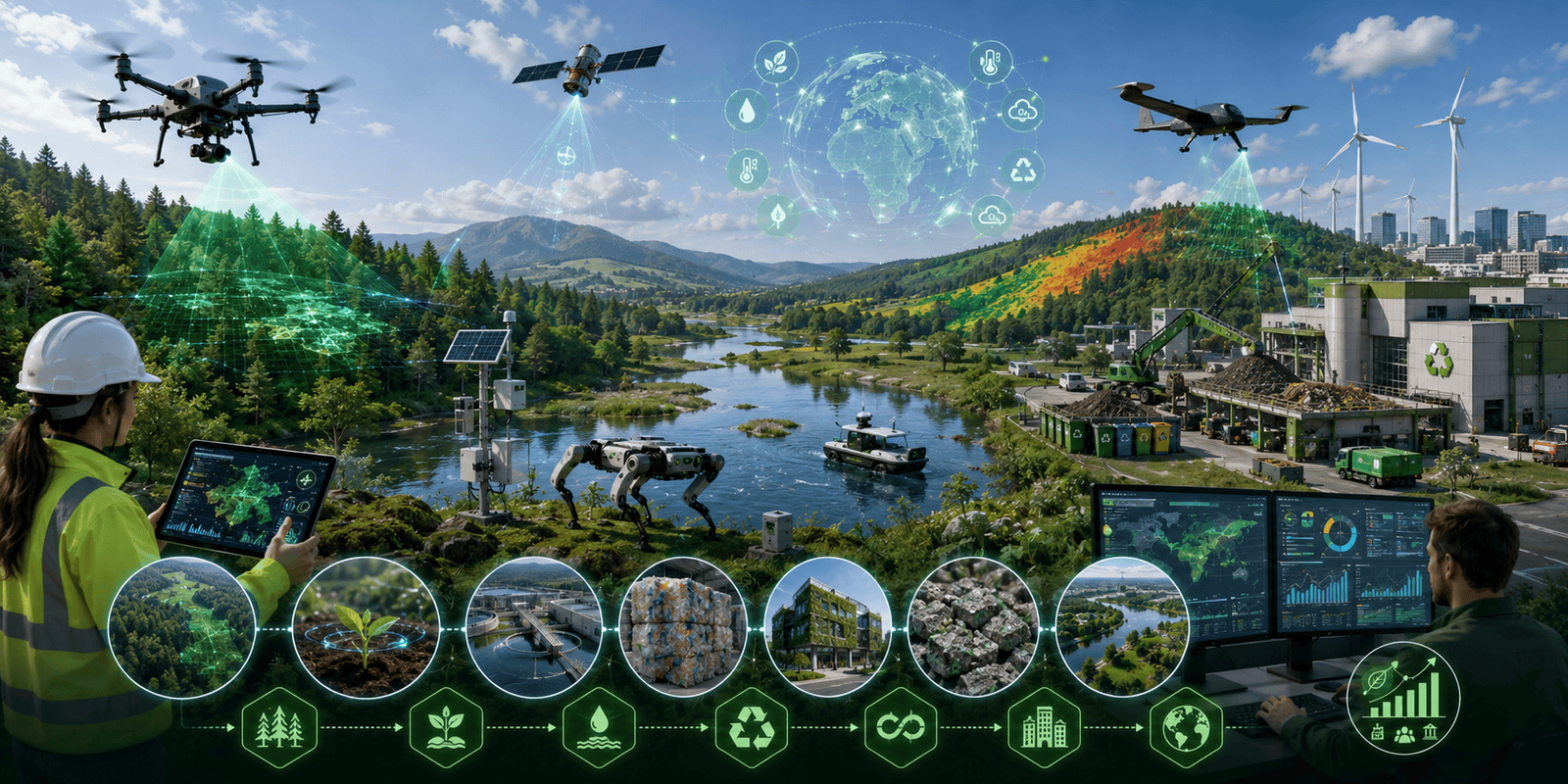
Environmental Sustainability and Circularity
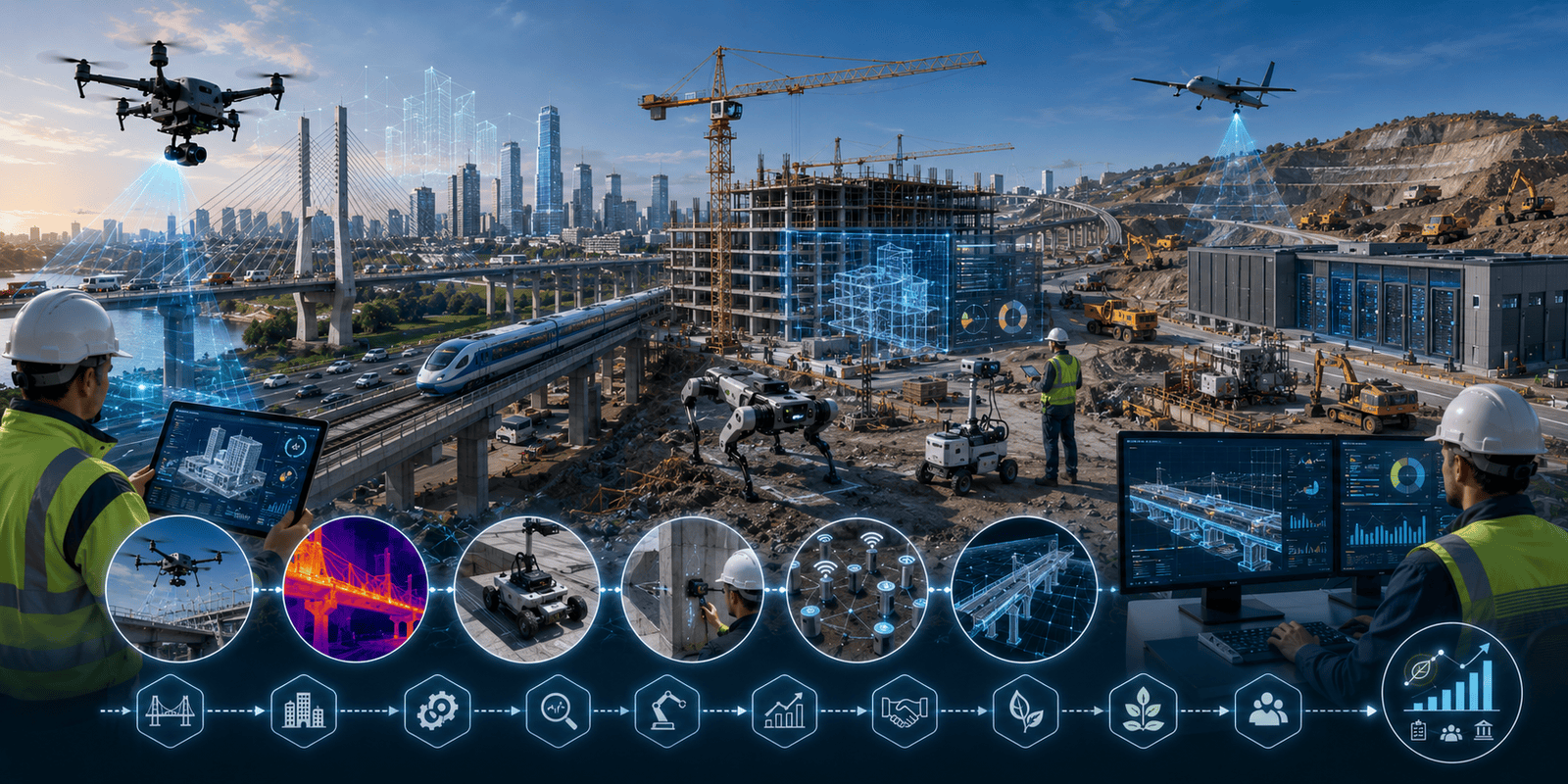
Construction, Infrastructure and Built Environment
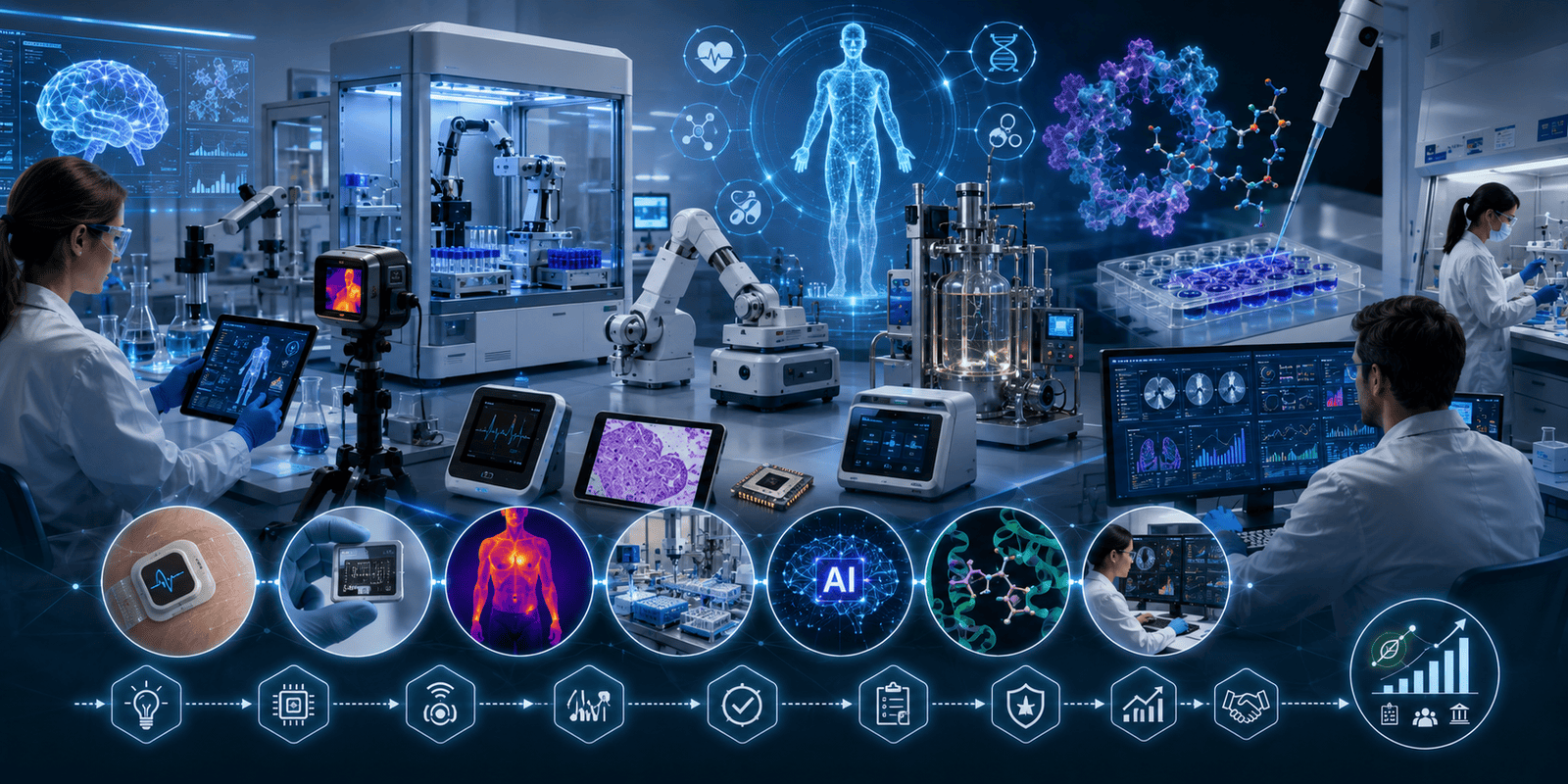
Health Devices, Diagnostics and Drug-Design Support
In health-device, diagnostics, biomedical engineering, bioreactor, lab automation, and AI-assisted drug-design projects, we can contribute sensing systems, embedded electronics, AI analytics, thermography, image processing, microelectronics, MEMS, simulation, and pilot-validation capability. Our role is strongest where health innovation requires engineering translation: moving from concept to prototype, from prototype to monitored pilot, and from pilot to exploitation pathway. We can support EU projects with device-oriented MVP/PoC design, sensing architecture, AI-enabled diagnostics workflows, laboratory automation, data-collection protocols, validation planning, regulatory-readiness mapping, business-case development, and commercialisation strategy. In AI-enabled drug-design or biotech-support projects, we can contribute at the level of computational workflows, market validation, exploitation modelling, and integration of AI tools into practical R&D pipelines.
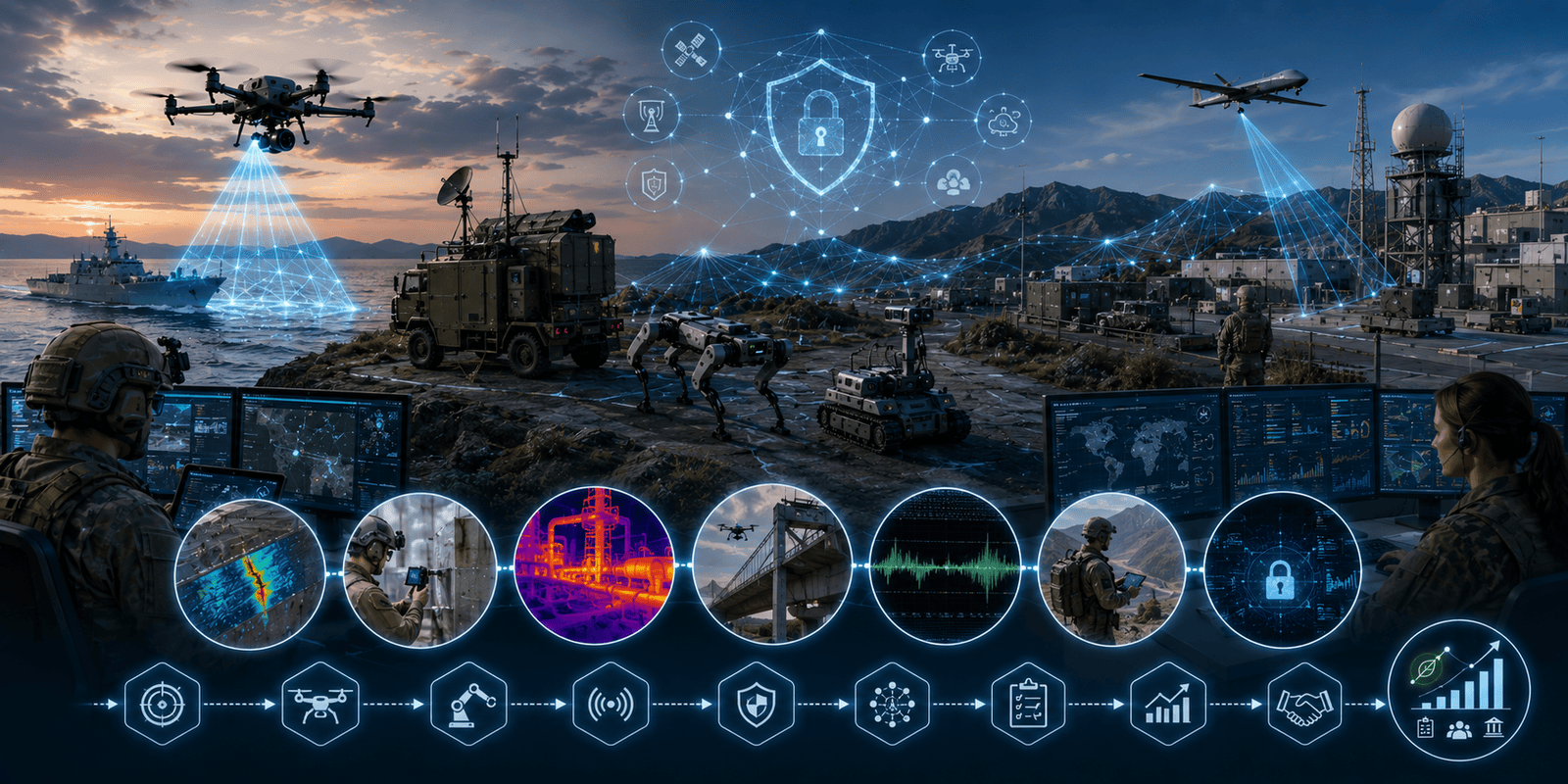
Defence, Security and Dual-Use Technologies
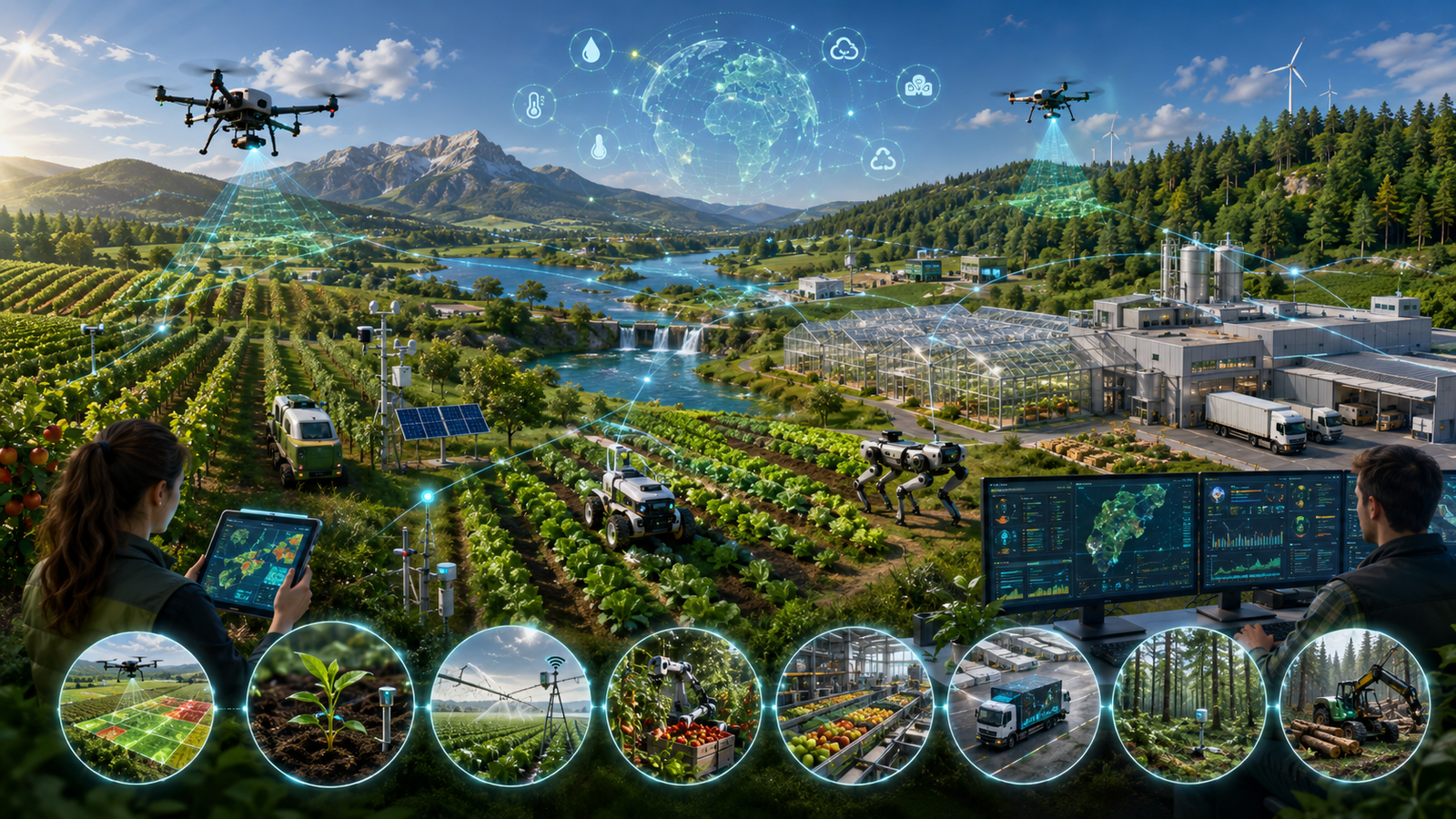
Agroscience, Agriculture, Forestry and Food Systems
In agroscience, agriculture, forestry, horticulture, food systems, and agribusiness projects, we can contribute AI-enabled monitoring, robotics-assisted field operations, precision agriculture and forestry, multispectral and drone-based sensing, IoT data collection, crop, soil, forest and biomass analytics, digital twins, circular bioeconomy models, and exploitation planning. Our contribution is particularly relevant where EU projects need to validate technologies in real environments, from early MVP/PoC design to living-lab deployment with farmers, forest managers, cooperatives, food producers, technology providers, regional authorities, and research institutions. We can support pilots involving autonomous drones, quadruped robots, sensor networks, AI vision, yield and biomass estimation, tree inventory, DBH ground-truth collection, disease and stress detection, irrigation optimisation, post-harvest monitoring, forest-health assessment, wildfire-risk monitoring, traceability, food-chain resilience, and sustainable resource use. Beyond the technical layer, we can assist with agri-food and forestry business-case development, KPI/KER definition, TRL roadmapping, ESG and circularity metrics, market assessment, cooperative business models, investor positioning, and commercialisation pathways that help agriculture, forestry, and food-system innovation move from research to measurable environmental, operational, and economic impact.

Business Economics and Management
In Business Economics and Management-related EU funded projects, we can assist faculties, departments, coordinators, and research groups by strengthening the practical exploitation, financial, strategic, and market-facing dimensions of the proposal. Our contribution can focus on transforming academic and technical research into credible business cases, market-entry strategies, investment narratives, cost-benefit models, revenue models, stakeholder maps, risk assessments, and commercialisation pathways. We can support work packages related to business modelling, innovation management, entrepreneurship, SME competitiveness, regional development, digital transformation, ESG strategy, circular economy, AI-enabled decision-making, and technology adoption. More specifically, we can help define Key Exploitation Results, KPIs, TRL roadmaps, go-to-market scenarios, investor-readiness plans, pricing logic, value propositions, business model canvases, and impact pathways. Our role is to help Business Economics and Management teams connect research excellence with real-world deployment, funding logic, policy relevance, industry adoption, and measurable economic, social, and commercial impact.